Wembley Stadium
All stadiums
  • England crest

London, United Kingdom · Stadium

Wembley Stadium

The home of football and the biggest stage in Britain

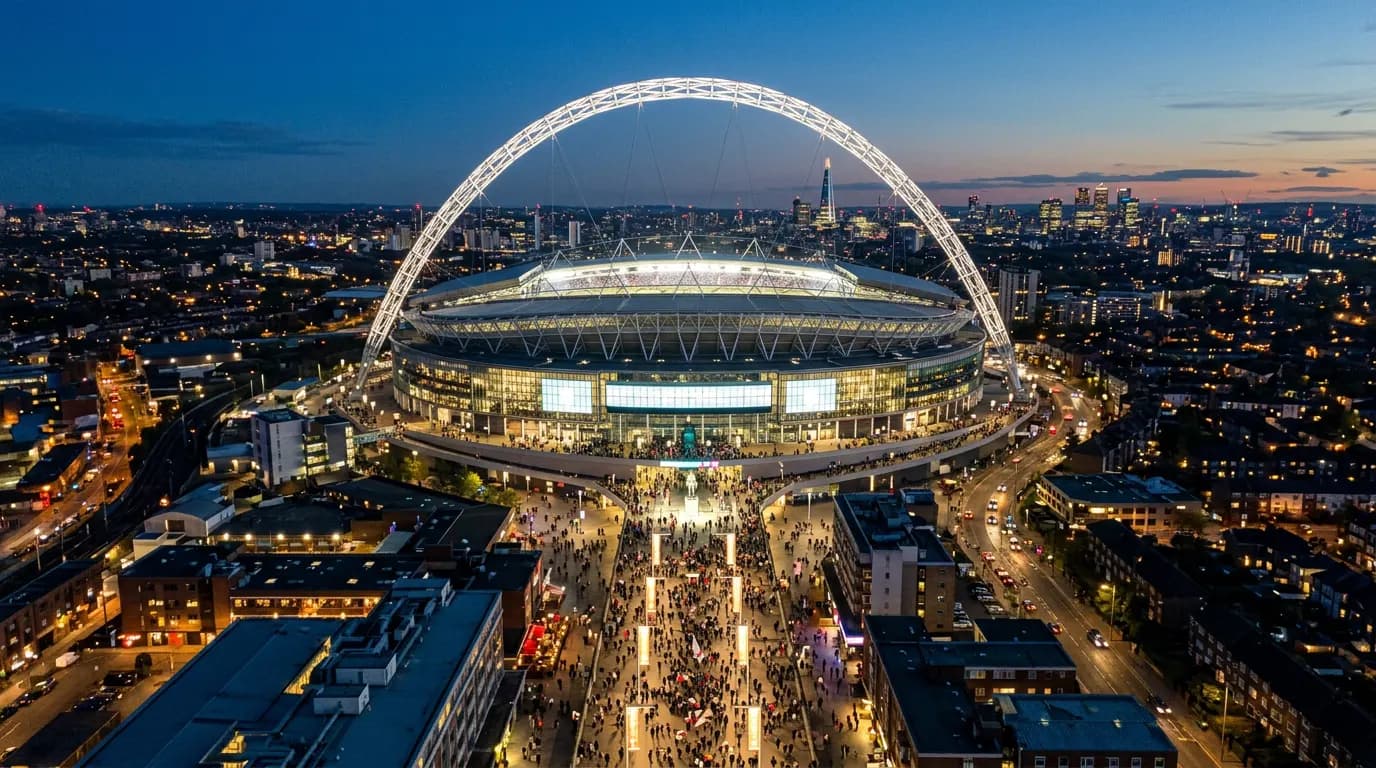
Britain's largest stadium, crowned by its 133-metre arch. From the 1966 World Cup final to Live Aid and record-breaking stadium tours, Wembley is where the biggest nights in Europe happen.

Capacity
90,000
Opened
1923 · rebuilt 2007
Architect
Foster + Partners and Populous
Home of
England national team, FA Cup final

Home club

England crest

England

The Three Lions

Founded
1872
Plays here since
1924

England's national team has played most home games at Wembley for a century. The old stadium saw the 1966 World Cup win, the new one the run to the Euro 2020 final.

Biggest honours

  • World Cup winners 1966
  • Euro finalists 2021 and 2024
  • Women's Euro winners 2022 and 2025

History

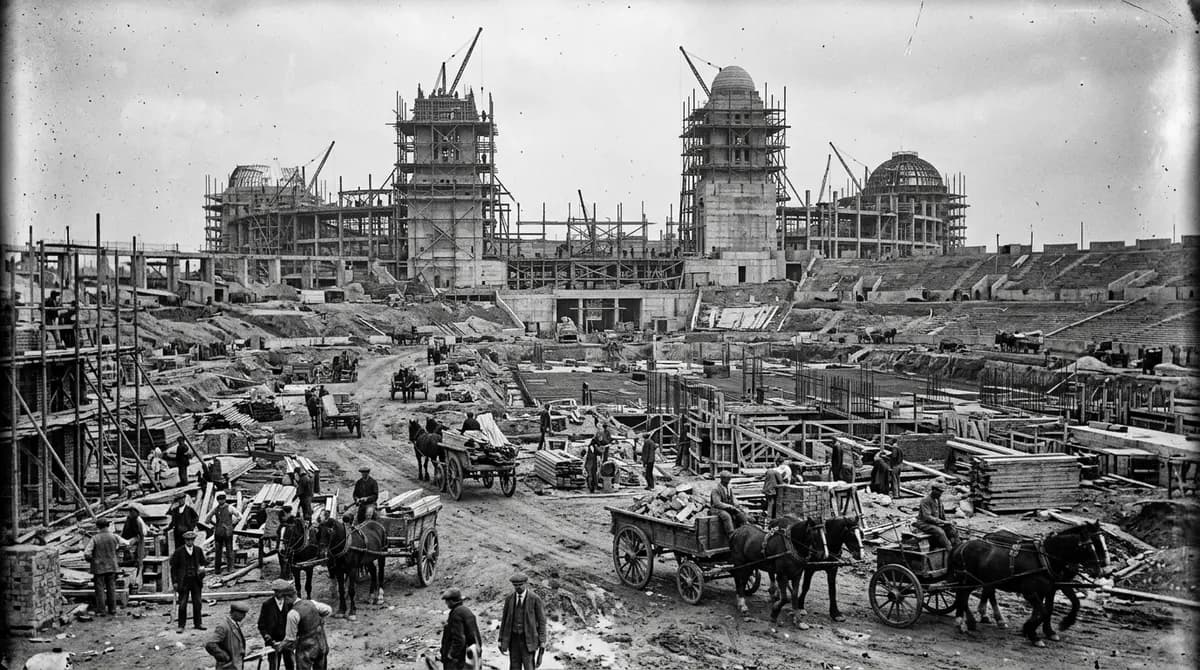
Wembley Stadium, 1923: The original Empire Stadium and its twin towers rise in under 300 days.
1923The original Empire Stadium and its twin towers rise in under 300 days.
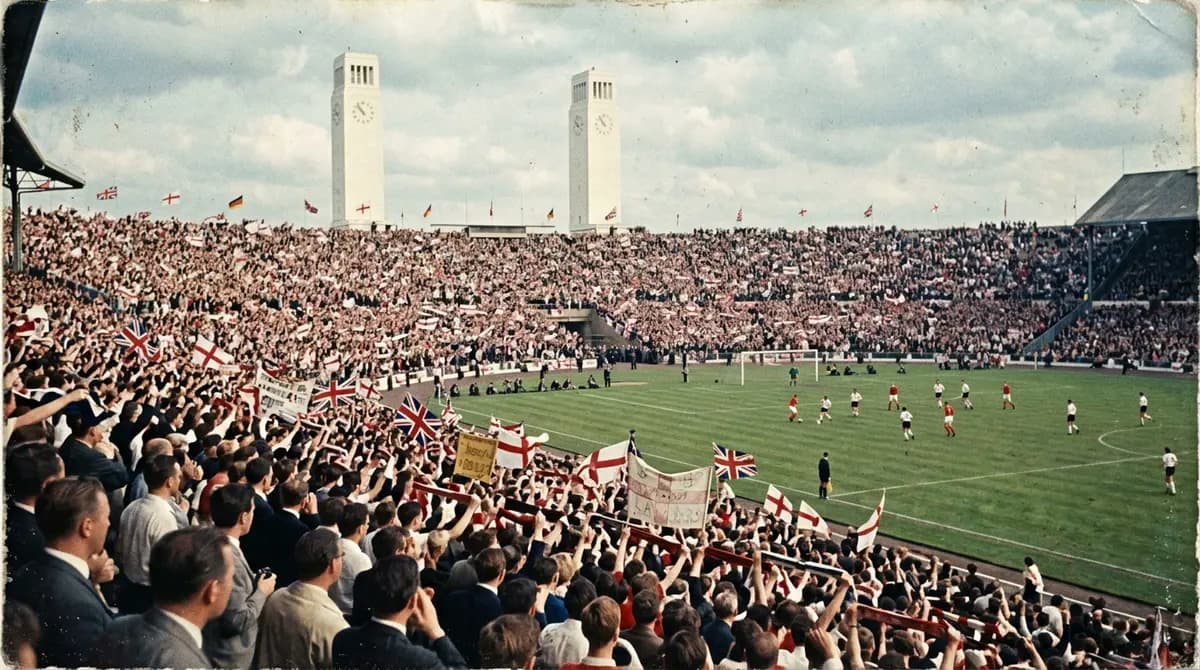
Wembley Stadium, 1966: England win the World Cup final under the twin towers.
1966England win the World Cup final under the twin towers.
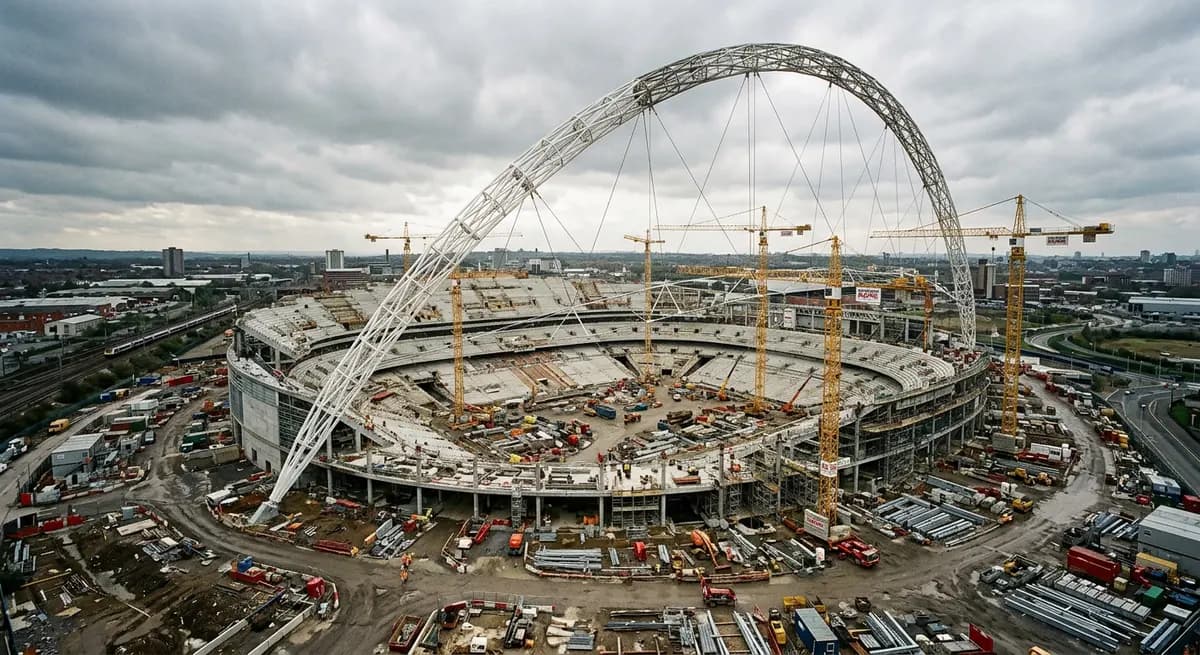
Wembley Stadium, 2006: The 133-metre arch goes up over the brand-new bowl.
2006The 133-metre arch goes up over the brand-new bowl.

The original Empire Stadium was built in under a year for the 1924 British Empire Exhibition and opened in April 1923. Its first event, the FA Cup final, drew a crowd so big that a mounted policeman on a white horse had to clear the pitch — the game is still remembered as the White Horse Final.

With its famous twin towers, old Wembley hosted the 1948 Olympic Games, England's 1966 World Cup win and Live Aid in 1985. It closed in 2000 and was demolished in 2002–2003, towers included.

The new stadium, designed by Foster + Partners and Populous, opened in 2007 on the same site. Its steel arch carries much of the roof, so no pillars block the view, and every one of the 90,000 seats faces the pitch under cover.

Milestones

  1. 1923Empire Stadium opens with the White Horse FA Cup final
  2. 1948Main stadium of the London Olympic Games
  3. 1966England beat West Germany 4–2 in the World Cup final
  4. 1985Live Aid concert, watched by an estimated 1.9 billion people
  5. 2003The twin towers are demolished
  6. 2007The new Wembley opens with the FA Cup final
  7. 2021Hosts the Euro 2020 final, Italy beat England on penalties
  8. 2024Taylor Swift plays eight sold-out Eras Tour nights

Legendary nights

1966

They think it's all over

Geoff Hurst scored a hat-trick as England won their only World Cup, 4–2 after extra time against West Germany.

1985

Live Aid

Queen's 21-minute set at the charity concert is often called the greatest live performance in rock history.

2011 & 2013

Two Champions League finals

Barcelona beat Manchester United in 2011, and Bayern Munich won the first all-German final against Dortmund in 2013.

Did you know?

  • The arch is 133 metres tall and spans 315 metres — the longest single-span roof structure in the world when it opened.
  • The concrete from the old stadium was reused in the foundations of the new one.
  • The roof can slide back to let sunlight reach the grass, but it can't close completely.
  • The bust of Bobby Moore outside the main entrance faces down Olympic Way, the classic walk to the stadium.

Seating layout

Capacity: 90,000123StageFloor

Indicative layout of Wembley Stadium for concerts — exact blocks vary by show.

0

Pitch / stage

Pitch / standing

1

Level 1 (100s)

Lower bowl, closest to the field. Great for atmosphere, flatter view of the stage.

2

Level 2 (200s)

Club seats and hospitality boxes. Padded seats and the best balance of height and distance.

3

Level 5 (500s)

The steep upper tier. Cheapest seats with a full view of the show, but far from the stage.

Seating tips

  • For concerts the stage usually stands at one end, so side sections in the 100s and 200s near the stage give the best view.
  • The top rows of Level 5 are very high — bring something warm, it gets windy up there.
  • Standing tickets are split into front and general zones. Arrive early for the front.

Getting there

Wembley Stadium

Wembley, London HA9 0WS

  • Wembley Park · Jubilee & MetropolitanThe busiest route, about 15 minutes from Baker Street, then a 5-minute walk down Olympic Way.
  • Wembley Stadium · Chiltern RailwaysTrains from Marylebone in about 10 minutes. Often the quickest way back into central London.
  • Wembley Central · Bakerloo & OvergroundA 10-minute walk away and usually less crowded after the show.

After the show

Queues at Wembley Park can take 30–45 minutes after a big show. Walk to Wembley Central or Wembley Stadium station, or wait it out in a nearby bar until the crowd thins.

Bags & entry

Only bags up to A4 size (about 35 × 40 × 19 cm) are allowed. There's no cloakroom inside, so travel light.

Where to stay nearby

Wembley Park

Walk back to your bed in minutes. Hotels sell out fast on show nights, so book early.

Marylebone & Baker Street

Central London with direct trains and tubes to the stadium.

King's Cross

Handy for Eurostar and the airports, with the Metropolitan line straight to Wembley Park.

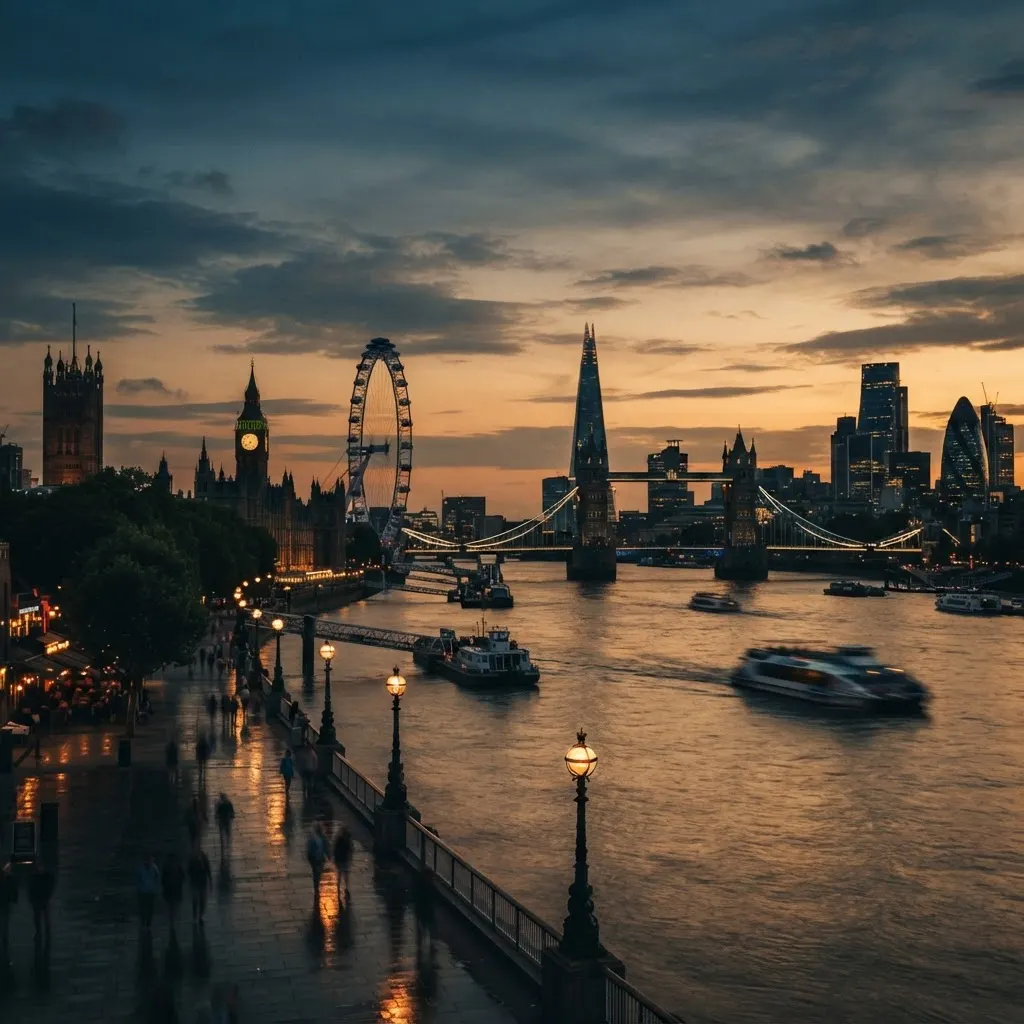
London

Planning the whole trip?

Read our London guide: where to stay, getting around, food and local tips.

Open the London guide

Upcoming events at Wembley Stadium

Live from Ticketmaster, with full trip prices.

Questions fans ask

How early should I arrive at Wembley?

Doors usually open 2–3 hours before the main act. Aim for at least 90 minutes before, especially with standing tickets.

Can I bring food and water?

Small snacks and an empty or sealed plastic bottle are usually fine. Check the event's own rules before you go.

Is Wembley Stadium covered?

Every seat is under the roof, but the pitch and standing area are open to the sky. Pack a light rain jacket.