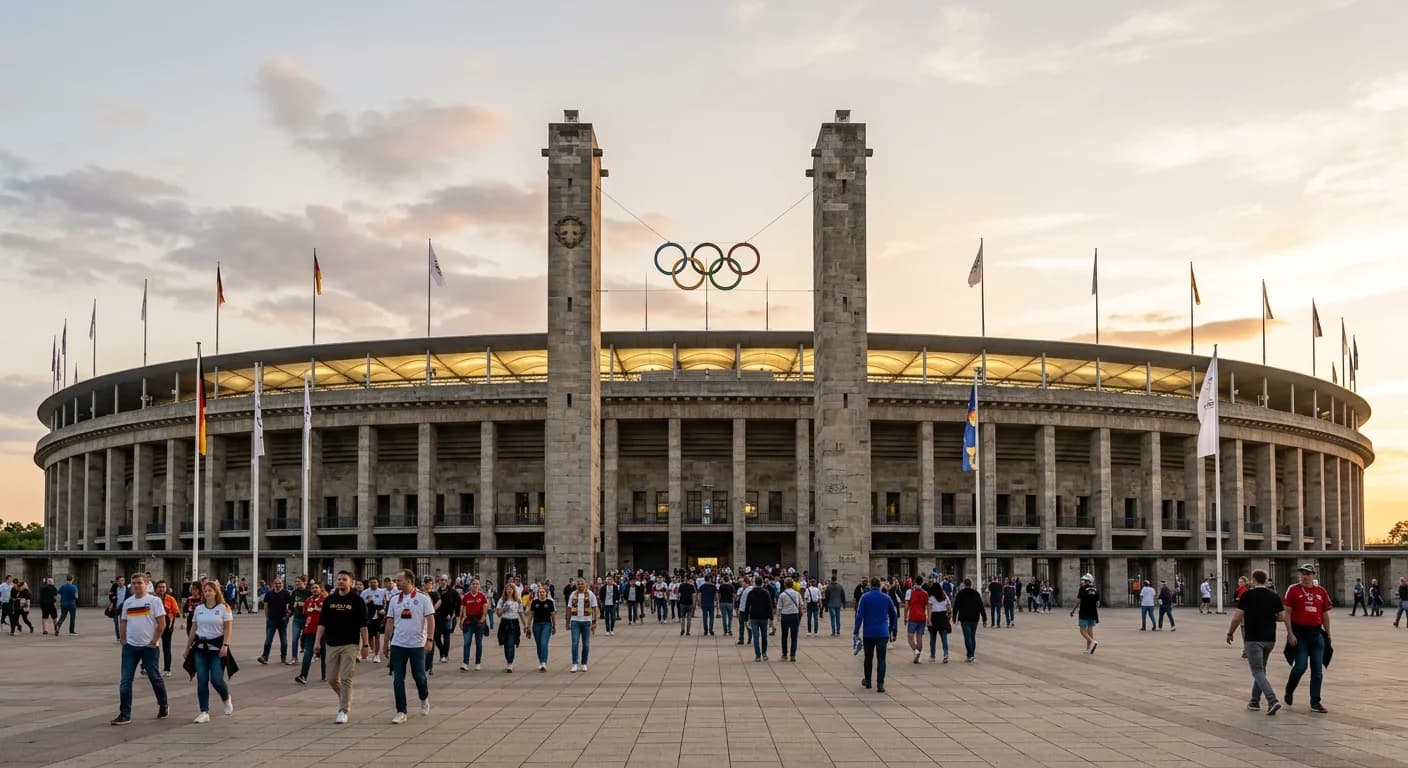
Olympiastadion Berlin
All stadiums
  • Hertha BSC crest

Berlin, Germany · Stadium

Olympiastadion Berlin

A stadium that lived through a century of German history

Built for the 1936 Olympics, rebuilt for the 2006 World Cup and home to the only blue running track at a major stadium. It hosted the World Cup, Euro and Champions League finals and the world's fastest 100 metres.

Capacity
74,500
Opened
1936 · renovated 2004
Architect
Werner March · renovation gmp Architekten
Home of
Hertha BSC, DFB-Pokal final

Home club

Hertha BSC crest

Hertha BSC

Die Alte Dame (The Old Lady)

Founded
1892
Plays here since
1963

Berlin's biggest club is named after a steamboat one of its founders took on the Havel. Hertha moved in when the Bundesliga started in 1963 and fills the blue-and-white Ostkurve on match days.

Biggest honours

  • German champions 1930 and 1931
  • Founding member of the Bundesliga
  • DFB-Pokal finalists 1977 and 1979

History

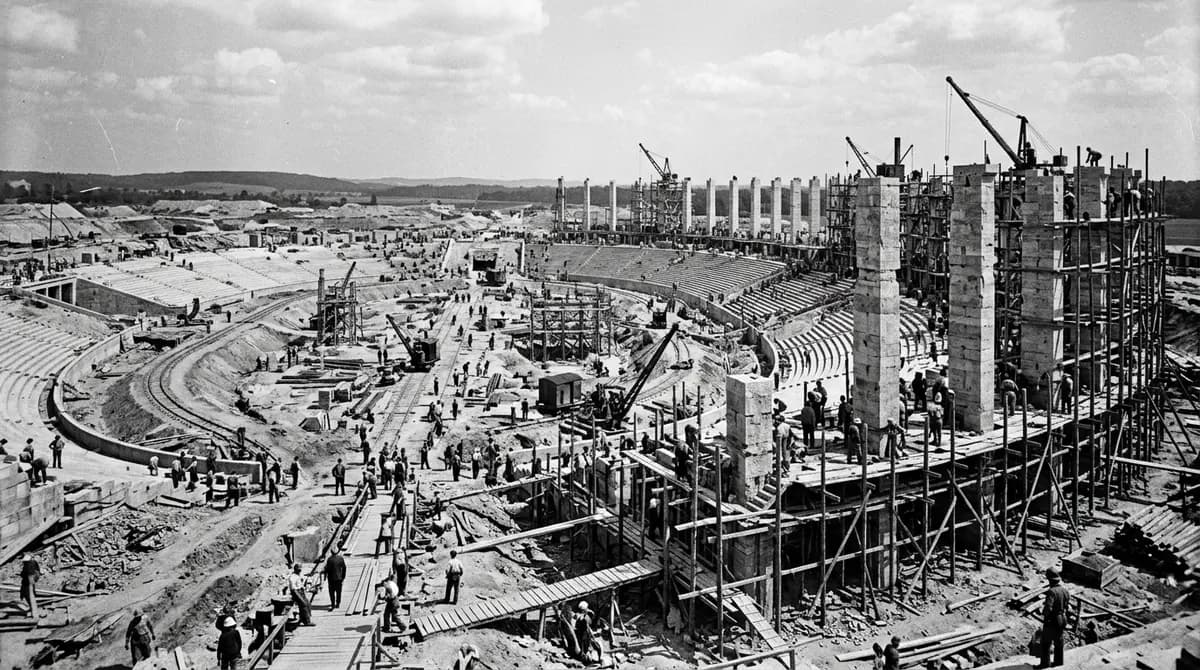
Olympiastadion Berlin, 1935: Limestone colonnades and a bowl sunk 12 metres into the ground take shape.
1935Limestone colonnades and a bowl sunk 12 metres into the ground take shape.
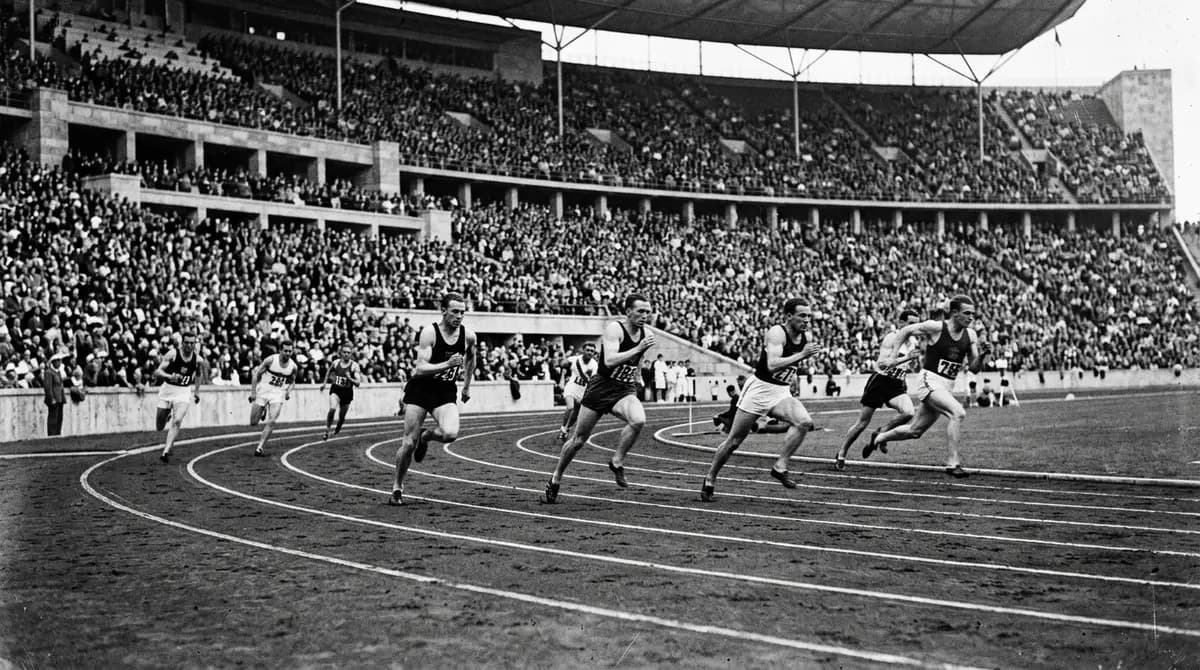
Olympiastadion Berlin, 1936: Summer Olympics: Jesse Owens wins four golds on this track.
1936Summer Olympics: Jesse Owens wins four golds on this track.
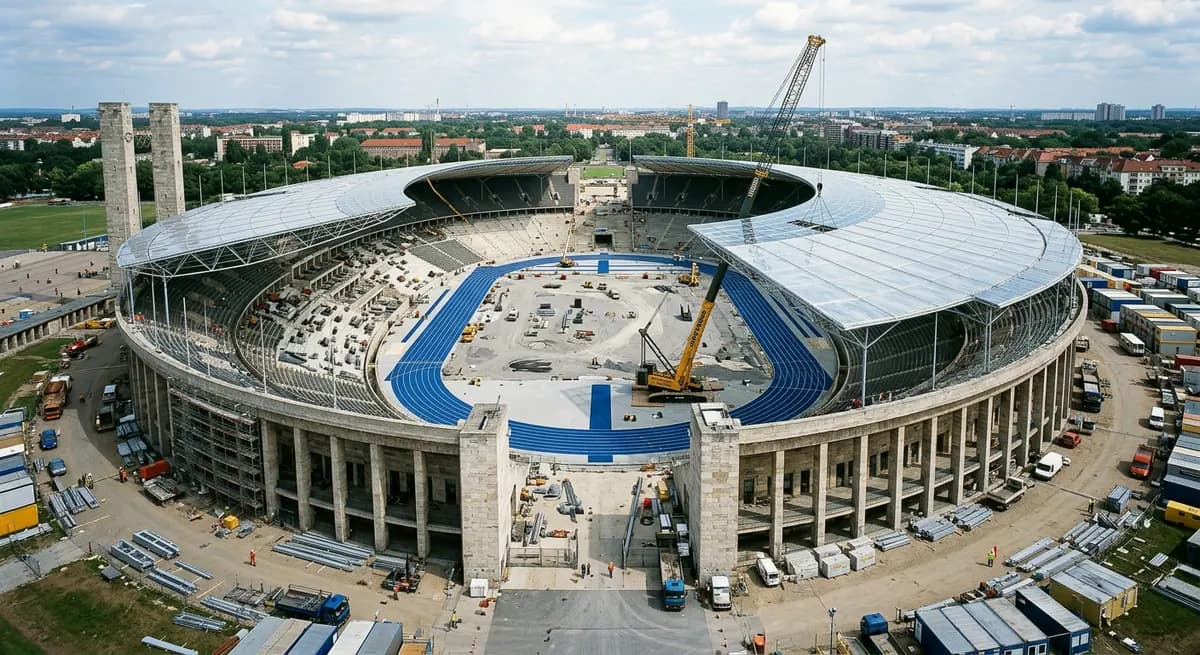
Olympiastadion Berlin, 2004: A four-year renovation adds the floating membrane roof and blue track.
2004A four-year renovation adds the floating membrane roof and blue track.

The Olympiastadion was built from 1934 to 1936 for the Berlin Olympic Games, designed by Werner March in heavy natural stone. The Nazi regime used the Games as propaganda, but the stadium is remembered for Jesse Owens, the African-American athlete who won four gold medals there.

It survived the war with relatively little damage and served the British army for years. From 1963 it became the home of Hertha BSC, and since 1985 it has hosted the German cup final every year.

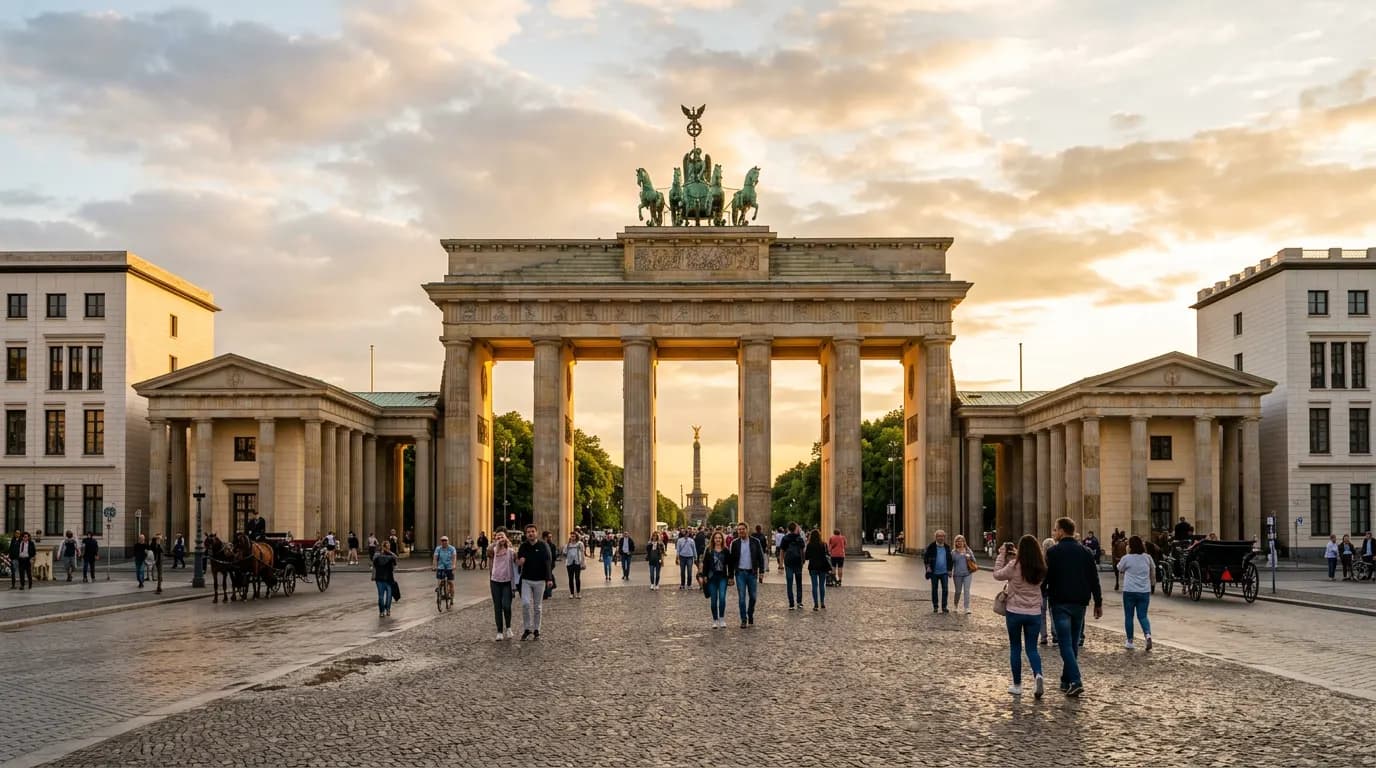
A major renovation from 2000 to 2004 lowered the pitch, added a new translucent roof and the blue track in Hertha's colours, while keeping the protected historic structure. The Marathon Gate at the west end still frames the view of the bell tower.

Milestones

  1. 1936Opens for the Summer Olympics, Jesse Owens wins four golds
  2. 1974Hosts matches of the World Cup in West Germany
  3. 1985Becomes the permanent home of the DFB-Pokal final
  4. 2004Reopens after a four-year renovation
  5. 2006World Cup final, Italy beat France on penalties
  6. 2009Usain Bolt runs 9.58 s, still the 100 m world record
  7. 2015Champions League final, Barcelona beat Juventus 3–1
  8. 2024Euro 2024 final, Spain beat England 2–1

Legendary nights

1936

Jesse Owens

Four gold medals in the 100 m, 200 m, long jump and relay, in front of the regime that claimed racial superiority.

2006

Zidane's last game

The World Cup final ended with Zinedine Zidane sent off for a headbutt and Italy winning on penalties.

2009

9.58 seconds

Usain Bolt set world records in both the 100 m and 200 m at the World Athletics Championships.

Did you know?

  • The blue track is unique among big stadiums — it matches Hertha BSC's club colours.
  • The pitch sits about 12 metres below ground level, so you enter the stadium halfway up the stands.
  • The Olympic bell in front of the stadium cracked in the war; the original now stands outside the south gate.
  • The renovated roof is held up by just 20 slim columns, so almost no seat has a blocked view.

Seating layout

Capacity: 74,50012StageFloor

Indicative layout of Olympiastadion Berlin for concerts — exact blocks vary by show.

0

Pitch / stage

Pitch / track

1

Unterring (lower ring)

Sunk below ground level and close to the field, but the running track adds distance.

2

Oberring (upper ring)

Steeper and higher, with an excellent view over the whole bowl. Partly uncovered in the top rows.

Seating tips

  • The running track makes the lower rows further from the field than at football-only stadiums.
  • Seats in the Oberring behind the roof edge can get rain on windy days.
  • The Marathon Gate end opens towards the bell tower — beautiful at sunset.

Getting there

Olympiastadion Berlin

Olympischer Platz 3, 14053 Berlin

  • S-Bahn S3 & S9 · OlympiastadionThe main route, about 20 minutes from Hauptbahnhof or Zoo, with a short walk to the south gate.
  • U-Bahn U2 · Olympia-StadionArrives at the east entrance, about 10 minutes on foot.
  • Extra trains on event daysBVG runs extra services. Your ticket often includes public transport — check before buying a fare.

After the show

The S-Bahn platforms fill up quickly. The U2 at Olympia-Stadion and Neu-Westend is often faster, or walk 15 minutes to Theodor-Heuss-Platz.

Bags & entry

Bags up to A4 size are usually allowed. Larger bags must be left at paid lockers near the gates.

Where to stay nearby

Charlottenburg

Quiet, elegant and close to the stadium, with the U2 and S-Bahn direct.

Mitte

Central sightseeing base, about 25 minutes by S-Bahn.

Westend

Small hotels and apartments within walking distance of the stadium.

Berlin

Planning the whole trip?

Read our Berlin guide: where to stay, getting around, food and local tips.

Open the Berlin guide

Upcoming events at Olympiastadion Berlin

Live from Ticketmaster, with full trip prices.

Questions fans ask

Is the Olympiastadion covered?

The roof covers almost all seats, but not the field or the standing area.

Is public transport included in my ticket?

For many concerts and football matches yes — look for the VBB logo on your ticket.

Can I visit the stadium without an event?

Yes, there are guided and self-guided tours on most non-event days.